Most of the raised, flexible and colourful brand labels you see on clothing, bags and shoes are known in the trade as rubber labels. For a brand ordering them for the first time, the first question is usually the same: what exactly is a rubber label, how is it made and which products is it suitable for? This article brings together the basic definition, the structure, the main uses and the information to prepare before you order. For label types and design details, we link to our separate guides.
What is a rubber label?
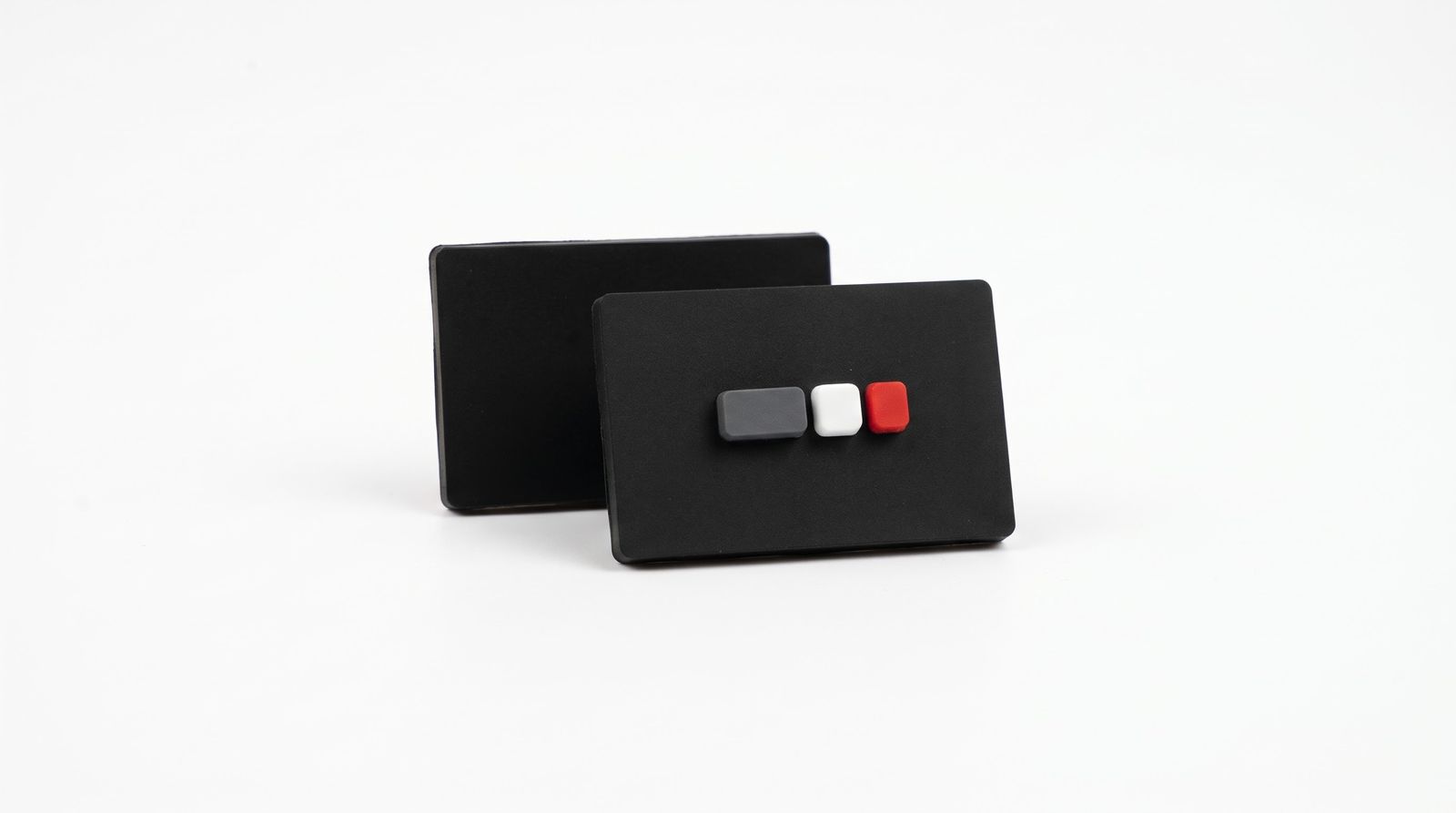
A rubber label is a flexible brand label that carries a logo or brand name in raised (3D) relief and in several colours. Although the name says “rubber”, most of these labels today are technically made from soft PVC. That is why “rubber label”, “soft PVC label” and “PVC label” usually describe the same product in everyday use.
In short: a rubber label is a soft-touch branding piece with a raised logo, produced in your brand colours and applied to fabric, straps or the product itself.
How is a rubber label made?
Production starts with a mould made specifically for your brand. A technical drawing is prepared from your logo, raised and recessed areas are defined, and the mould is made from this drawing. Soft PVC is applied into the mould colour by colour using micro-injection and then set with heat. Because each colour is handled as a separate layer, fine lettering, contour lines and small logo details stay sharp.
A sample is made before series production; production starts after you approve colour, size and relief. The process in brief:
- Request: You send the logo, size, quantity and application method.
- Technical drawing and quote: The design is adapted for the label.
- Mould: After approval, a mould is made for your brand.
- Sample: Colours and details are approved on a sample.
- Series production and shipping: Packing, domestic delivery or export.
Structure and features of a rubber label
- Raised (3D) look: Logos and text can be raised or recessed. Tone-on-tone designs give a clean, premium look.
- Multiple colours: Your brand colours for the base and lettering. If you give a Pantone reference, colours are matched to it.
- Flexibility: Soft PVC moves with the fabric instead of sitting like a hard part.
- Thickness: For many apparel and accessory uses we produce in the 1.8–2.2 mm range. We cover how thickness affects relief in Rubber Label Design: Thickness, Fold-over and a Phthalate-Free Formula.
- Phthalate-free formula: Our rubber labels use a phthalate-free formulation.
- Free form: Rectangle, oval, long slogan label or a custom shape following your logo’s contour.
Where are rubber labels used?
- Denim and trousers: Waistband and back-pocket labels. See Rubber Labels for Jeans and Denim.
- Sweatshirts, T-shirts and tracksuits: Brand labels on the chest, sleeve or collar.
- Beanies, hats and knitwear: Light, soft labels for stretchy fabrics. See Rubber Labels for Beanies, Hats and Knitwear.
- Bags and backpacks: A visible logo on the front panel or strap. See Choosing a Rubber Label for Bags.
- Footwear: Heel tabs and tongue labels. See Heel Tabs and Tongue Labels.
- Workwear and private label collections: See Rubber Labels for Private Label and E-commerce Brands.
Application types: sew-on, strap-through, fold-over
- Sew-on: A stitching margin is left around the edge and the label is sewn onto the fabric.
- Strap-through: Slots on both sides let a belt, strap or tape pass through.
- Fold-over: A centre groove lets the label fold over a fabric edge in a U shape, so the logo can show on both sides.
All types, including waistband, accessory and custom-shaped labels, are explained in Types of PVC Labels: Models Used on Apparel and Accessories.
Rubber label or woven label?
A woven label is thin and flat and is usually used inside the collar or as a size label. A rubber label brings the brand forward on the outside of the product through relief, colour and feel. Many collections use both.
What to prepare before ordering
- Logo file: Vector format (AI, PDF, SVG) is preferred; otherwise a high-resolution image.
- Size: Approximate width and height of the label.
- Colours: Base and lettering colours; Pantone codes if you have them.
- Application: Sew-on, strap-through or fold-over.
- End product: Jeans, sweatshirt, beanie, bag, shoe, etc.
- Quantity: The amount you plan per design.
Frequently asked questions
Are a rubber label and a soft PVC label the same product?
In everyday use, yes. Most products called rubber labels are soft PVC, and ASLAB’s rubber labels are made from soft PVC.
How many colours can one label have?
We produce multi-colour labels. The number of colours is settled at the technical drawing stage.
Do you produce private label?
Yes. Labels are made entirely with your logo and brand colours, and we take domestic and export B2B orders.
Get a rubber label quote
See models and options on our Rubber Labels (Soft PVC Labels) page. Send your logo, size and quantity through the Get a Quote form and we will prepare your technical drawing and quote.